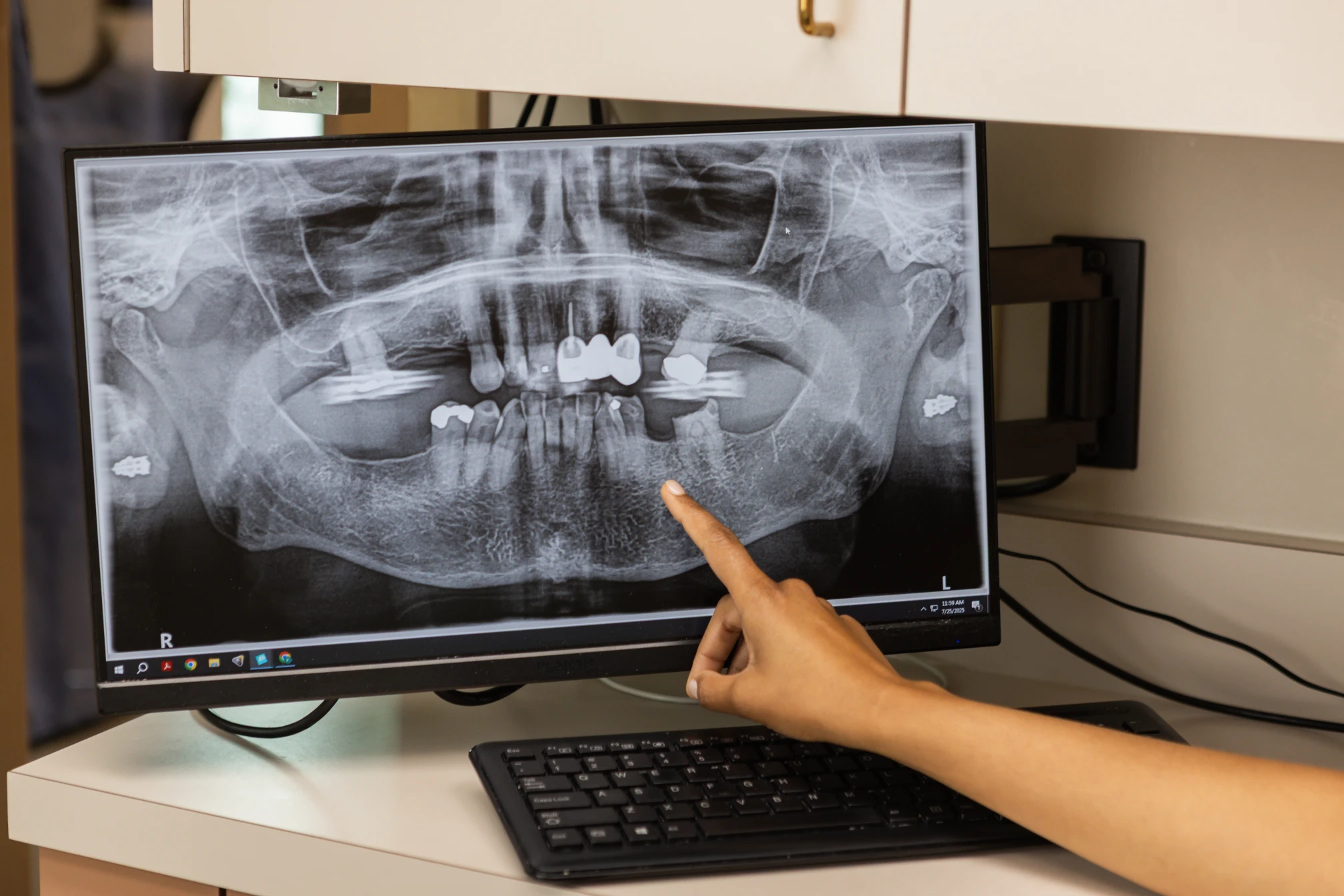
Root canal therapy removes infected pulp from inside your tooth, eliminating pain while preserving your natural tooth structure.
Root canal therapy represents one of modern dentistry’s most effective treatments for saving severely infected or damaged teeth. This endodontic treatment eliminates bacteria, prevents reinfection, and allows you to maintain normal biting force and sensation.
The modern endodontic treatment removes infected pulp, providing immediate pain relief without requiring tooth extraction or costly replacement procedures.
Contemporary root canal therapy using advanced equipment and materials achieves predictable, long-lasting results when performed by experienced practitioners.
Most dental plans classify root canal therapy as a major procedure with substantial coverage, making treatment more affordable than extraction alternatives.
Addressing pulp infections promptly prevents abscess formation, bone loss, and systemic health complications while maintaining proper jaw function.
Dr. Priya’s advanced training and gentle approach ensure comfortable, successful treatment with the personalized care you deserve.
Explore how our cosmetic dentistry has changed the lives of our patients.
Before
After
Before
After
Before
After
Before
After
Before
After
Before
After
Before
After
Before
After
Before
After
Before
After
Before
After
Before
After
Before
After
Before
After
Before
After
Before
After
Before
After
Before
After
Root canal therapy works by accessing the tooth’s interior through a small opening. Modern technology and specialized equipment make this process highly predictable and comfortable.
Local anesthetic ensures complete pain management throughout the procedure. Your endodontist or general dentist creates a tiny access hole in the tooth’s crown to reach the infected pulp chamber.
The infected pulp gets carefully removed using specialized instruments. Each root canal gets thoroughly cleaned and shaped to eliminate all bacteria. After disinfection, the canals receive a permanent filling material that seals them against future infection.
Root canal therapy addresses the source of severe tooth pain by removing infected pulp. Patients experience rapid relief from throbbing, temperature sensitivity, and pressure-related discomfort that characterizes pulp infection.
This treatment allows you to keep your natural tooth instead of requiring extraction. Maintaining your original tooth preserves proper chewing function, speech patterns, and prevents adjacent teeth from shifting into the empty space.
Modern root canal therapy achieves success rates exceeding 95% when performed by experienced practitioners. Advanced imaging and equipment ensure thorough cleaning and predictable outcomes
Root canal therapy costs significantly less than tooth extraction, followed by replacement options like dental implants or bridges. Insurance coverage typically ranges from 50-80% for endodontic treatment.
Ideal candidates experience specific symptoms indicating pulp infection or inflammation. Severe tooth pain, especially when chewing or applying pressure, suggests pulp involvement requiring endodontic treatment.
Prolonged sensitivity to hot or cold temperatures that lingers after the stimulus disappears indicates pulp damage. Swelling and tenderness in the surrounding gums, along with tooth discoloration, also suggest the need for root canal therapy.
Patients with abscesses visible on X-rays, cracked teeth with pulp exposure, or those experiencing trauma-related pulp inflammation benefit most from this treatment. Early intervention provides the best outcomes and prevents complications.
1.
Your dentist conducts a thorough examination, including X-rays, to assess tooth structure and surrounding bone. Digital imaging reveals the extent of infection and helps plan the treatment approach. Local anesthetic administration ensures complete comfort throughout the procedure.
2.
A small opening gets created in the tooth’s crown to access the infected pulp chamber. All infected tissue, including pulp and nerve material, gets carefully removed from the main chamber and root canals using specialized instruments.
3.
Each root canal receives a thorough cleaning and shaping to remove all bacteria and infected material. Antimicrobial solutions disinfect the canals, ensuring complete elimination of infection-causing organisms.
4.
The cleaned canals get filled with gutta-percha, a biocompatible material that seals the space against future bacterial invasion. A temporary filling closes the access opening while permanent restoration is planned.
5.
A permanent crown or filling restores the tooth’s full function and appearance. This final restoration protects the treated tooth from fracture and provides normal chewing capability. The restoration process typically occurs 2-3 weeks after root canal completion.
Root canal therapy ranks among dentistry’s safest and most predictable procedures. Decades of research and millions of successful treatments demonstrate excellent safety profiles when performed by qualified dental professionals.
Contemporary endodontic treatment uses biocompatible materials and sterile techniques that minimize complications. Local anesthetics used during the procedure have proven safety records, with adverse reactions occurring in less than 1% of patients.
Advanced imaging technology allows precise treatment planning, reducing the risk of complications. Digital X-rays and cone beam CT scans provide detailed views of tooth anatomy, helping identify potential challenges before treatment begins.
Like all medical procedures, root canal therapy carries minimal risks that patients should understand. The most common complications include temporary discomfort, incomplete healing, or the need for retreatment in rare cases.
Post-treatment pain typically resolves within 2-3 days using over-the-counter pain relievers. Severe complications such as instrument breakage or perforation occur in less than 2% of cases when treatment is performed by experienced practitioners.
Root canal-treated teeth can function normally for decades with proper care and restoration. The removal of infected pulp eliminates the source of systemic infection, actually improving overall health outcomes.
Regular dental checkups allow monitoring of treated teeth to ensure continued success. Early detection of any issues enables prompt intervention and maintains long-term oral health.
At PS Dental Studio, we understand that root canal therapy can feel overwhelming. Our gentle approach combines advanced technology with compassionate care to ensure your comfort throughout treatment.
Dr. Priya Sridhar’s extensive training includes advanced endodontic techniques that maximize treatment success while minimizing discomfort. As a Fellow of the Academy of General Dentistry, she possesses the specialized knowledge necessary for complex root canal cases.
Our convenient Kenmore location serves the greater Seattle area with comprehensive endodontic services. We work with major insurance providers, including Delta Dental, Premera, and Regence BlueCross BlueShield, to maximize your coverage.
Flexible financial options make root canal therapy accessible when you need it most. Don’t let cost prevent you from saving your natural tooth and eliminating pain.
Contact us today to schedule your root canal consultation and begin your journey back to comfortable, pain-free oral health.
How does root canal therapy compare to alternatives?
Root canal therapy preserves your natural tooth, maintaining proper jaw alignment and chewing efficiency. Tooth extraction requires costly replacement options like implants or bridges, with treatment extending over several months.
Contemporary endodontic treatment uses advanced imaging, rotary instruments, and improved anesthetic techniques. These innovations significantly reduce treatment time, improve comfort, and increase success rates compared to older methods.
Antibiotics cannot eliminate an infection trapped inside the tooth structure. Root canal therapy physically removes infected tissue, providing definitive treatment that prevents recurring infections and complications.
Root canal therapy removes infected or inflamed pulp from inside your tooth, eliminating pain while preserving the natural tooth structure and function.
Modern root canal therapy causes minimal discomfort due to effective local anesthetics and advanced techniques. Most patients experience only mild soreness afterward.
Properly performed root canal therapy can last a lifetime with appropriate restoration and good oral hygiene. Success rates exceed 95% for most cases.
Root canal costs range from $700-$1,500, depending on tooth location and complexity. Molars typically cost more than front teeth due to multiple roots.
Severe tooth pain, prolonged temperature sensitivity, swelling, and tooth discoloration indicate possible pulp infection requiring endodontic evaluation.
Most dental insurance plans cover 50-80% of root canal therapy costs, classifying it as a major restorative procedure with substantial benefits.
Root canal therapy preserves your natural tooth, maintaining proper jaw function and avoiding costly replacement procedures like implants or bridges.
Untreated pulp infections can lead to abscess formation, bone loss, systemic infection, and eventual tooth loss, requiring more extensive treatment.
OUR SERVICES
Enhancing appearance and covering imperfections with a natural-looking finish.
Remove stains and brighten your smile with dental-grade teeth whitening.
Used to straighten mild to moderately misaligned teeth. A cheaper and more comfortable alternative to braces.
We offer two easy ways to schedule your next dental appointment: call us directly, or fill out the form on this page.
(425) 485-0588
Fill out the form
Open 7am - 4pm
Closed