PS Dental Studio · Kenmore, WA

No-Prep Veneers.
More of Your
Natural Smile.

Change your smile while preserving as much natural enamel as possible. Explore a conservative porcelain veneer approach, thoughtfully planned around your teeth.

Conservative
Enamel-conscious planning
Custom
Porcelain smile design
Personal
Care with Dr. Sridhar
Approach
Little to no enamel reduction
Provider
Dr. Priya Sridhar
Material
Custom porcelain
Location
Kenmore, Washington
A Conservative Approach

What Are No-Prep Veneers?

Add shape. Preserve enamel.

No-prep veneers are thin porcelain restorations bonded to the front surface of the teeth. Unlike traditional veneers, which generally require some enamel shaping before placement, a true no-prep veneer is designed to be primarily additive.

That means there must already be enough room in the smile to add porcelain without making the teeth look bulky or overcontoured.

No-prep veneers may be considered for concerns such as:

  • Naturally small or narrow teeth
  • Minor spaces between front teeth
  • Short or worn teeth
  • Small chips
  • Mild shape irregularities
  • Certain cosmetic discoloration concerns

Patients exploring cosmetic dentistry because their teeth appear small, uneven, or slightly spaced may be especially interested in whether a no-prep approach is possible.

At PS Dental Studio in Kenmore, Dr. Priya Sridhar evaluates whether a true no-prep approach, minimal-prep veneers, or traditional porcelain veneers will create the most natural and predictable result for your teeth.

For the right patient, no-prep veneers can provide a noticeable cosmetic change with little to no enamel removal.

Smile Transformations

Explore how our cosmetic dentistry has changed the lives of our patients.

View All Before & Afters

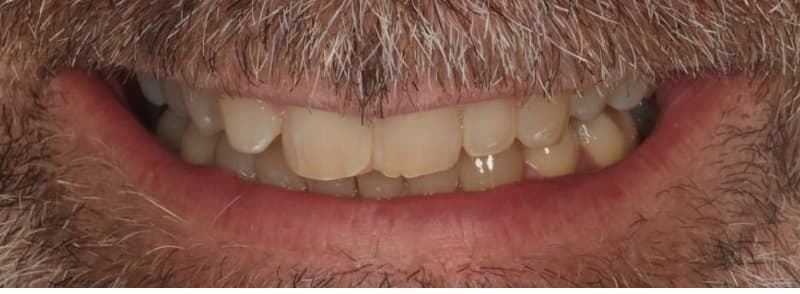
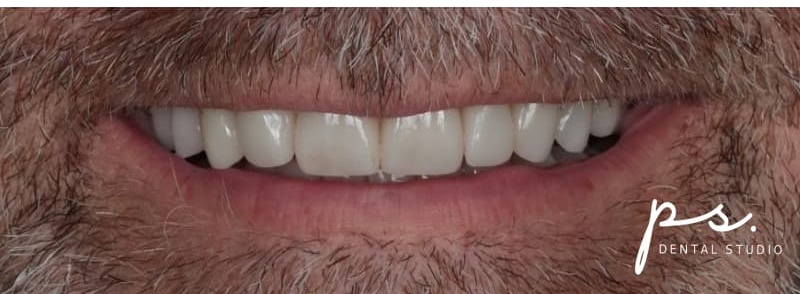
Photographs show actual PS Dental Studio patients across a range of cosmetic treatments, not exclusively no-prep veneer cases. Individual results vary and depend on your own teeth, bite, and treatment plan.

After treatment at PS Dental Studio, case 01 Before treatment at PS Dental Studio, case 01 Before After
After treatment at PS Dental Studio, case 02 Before treatment at PS Dental Studio, case 02 Before After
After treatment at PS Dental Studio, case 03 Before treatment at PS Dental Studio, case 03 Before After
After treatment at PS Dental Studio, case 04 Before treatment at PS Dental Studio, case 04 Before After
After treatment at PS Dental Studio, case 05 Before treatment at PS Dental Studio, case 05 Before After
After treatment at PS Dental Studio, case 06 Before treatment at PS Dental Studio, case 06 Before After
After treatment at PS Dental Studio, case 07 Before treatment at PS Dental Studio, case 07 Before After
After treatment at PS Dental Studio, case 08 Before treatment at PS Dental Studio, case 08 Before After
After treatment at PS Dental Studio, case 09 Before treatment at PS Dental Studio, case 09 Before After
After treatment at PS Dental Studio, case 10 Before treatment at PS Dental Studio, case 10 Before After
After treatment at PS Dental Studio, case 11 Before treatment at PS Dental Studio, case 11 Before After
After treatment at PS Dental Studio, case 12 Before treatment at PS Dental Studio, case 12 Before After
After treatment at PS Dental Studio, case 13 Before treatment at PS Dental Studio, case 13 Before After
After treatment at PS Dental Studio, case 14 Before treatment at PS Dental Studio, case 14 Before After
After treatment at PS Dental Studio, case 15 Before treatment at PS Dental Studio, case 15 Before After
After treatment at PS Dental Studio, case 16 Before treatment at PS Dental Studio, case 16 Before After
After treatment at PS Dental Studio, case 17 Before treatment at PS Dental Studio, case 17 Before After
After treatment at PS Dental Studio, case 18 Before treatment at PS Dental Studio, case 18 Before After
The Right Amount of Preparation

No-Prep vs. Minimal-Prep vs. Traditional Veneers

“No-prep” is sometimes used broadly, but there is an important difference between true no-prep treatment and other conservative veneer techniques.

02 / APPROACH

Minimal-Prep Veneers

Some teeth need a very small amount of enamel shaping to improve contour, fit, or final tooth position.

In these cases, Dr. Sridhar may recommend a minimal-prep approach rather than forcing a completely additive restoration where it does not belong.

03 / APPROACH

Traditional Veneers

Traditional veneers generally require more deliberate enamel preparation so porcelain can replace part of the existing tooth contour.

They may be more appropriate when teeth already project forward, require greater color correction, have irregular positioning, or need more significant changes in shape.

Comparison of no-prep, minimal-prep, and traditional porcelain veneers at PS Dental Studio
ConsiderationNo-Prep VeneersMinimal-Prep VeneersTraditional Veneers
Enamel ReductionLittle to noneA very small amount of shapingMore deliberate preparation
AnesthesiaMay not be neededOften minimalTypically used
TemporariesGenerally unnecessaryCase dependentUsually placed between visits
Best Suited ToSmall, narrow, short, or slightly spaced teeth with room to add porcelainTeeth needing a small contour or fit correction before porcelainTeeth that project forward, sit irregularly, or need greater color or shape change
Porcelain LongevityRoughly 10 to 15 yearsRoughly 10 to 15 yearsRoughly 10 to 15 years
Long-Term DecisionYes. Treat as long term even with minimal preparationYesYes

Longevity depends on the underlying tooth, veneer design, bite forces, bonding, and maintenance rather than on the preparation technique alone. For a fuller comparison against crowns and bonding, see the porcelain veneers page.

The goal is not automatically to remove the least enamel possible. It is to preserve healthy tooth structure while still creating a restoration that looks natural, fits the bite, and can be maintained long term.

Designed Around Your Teeth

Who Is a Good Candidate for No-Prep Veneers?

No-prep veneers tend to work best when there is room to add porcelain.

They may be a good fit for patients with:

  • Small or narrow teeth
  • Short teeth that would benefit from added length
  • Minor gaps
  • Mild wear or chipping
  • Favorably positioned front teeth
  • Healthy enamel suitable for bonding

Some patients researching veneers for small teeth may have exactly the type of proportions that make an additive veneer worth considering.

However, candidacy depends on more than tooth size. Dr. Sridhar also evaluates the bite, gum position, existing restorations, tooth angulation, enamel condition, and the amount of change needed.

When No-Prep Veneers May Not Be the Best Choice

No-prep treatment is not ideal for every smile.

Adding porcelain to a tooth that already sits too far forward can make the result look or feel bulky. Significant crowding, rotation, bite problems, active decay, gum disease, or extensive existing restorations may also change the treatment plan.

In some cases, moving the teeth first with clear aligners may create a better foundation for conservative veneers.

Other patients may need only cosmetic composite bonding for a small chip or localized shape concern, while professional teeth whitening may be more appropriate when color is the primary issue.

The consultation is therefore about determining whether no-prep veneers are genuinely the best fit, not simply whether they can technically be placed.

Your Treatment, Thoughtfully Planned

What Is the No-Prep Veneer Process Like?

Treatment begins with evaluating your existing teeth and determining how much, if any, preparation is actually necessary.

Dr. Priya Sridhar reviewing a patient's smile during a no-prep veneer consultation at PS Dental Studio in Kenmore
01

Consultation and Smile Evaluation

Dr. Sridhar reviews your enamel, bite, gum health, tooth position, and cosmetic goals.

This is where she determines whether the case can remain truly no-prep or whether limited preparation would improve the final result.

Digital smile design planning for porcelain veneers at PS Dental Studio
02

Smile Design

The planned length, width, contour, and proportions of the teeth are established before the final porcelain is made.

This stage is especially important in a no-prep case because the restoration is being added to the existing tooth rather than replacing removed enamel.

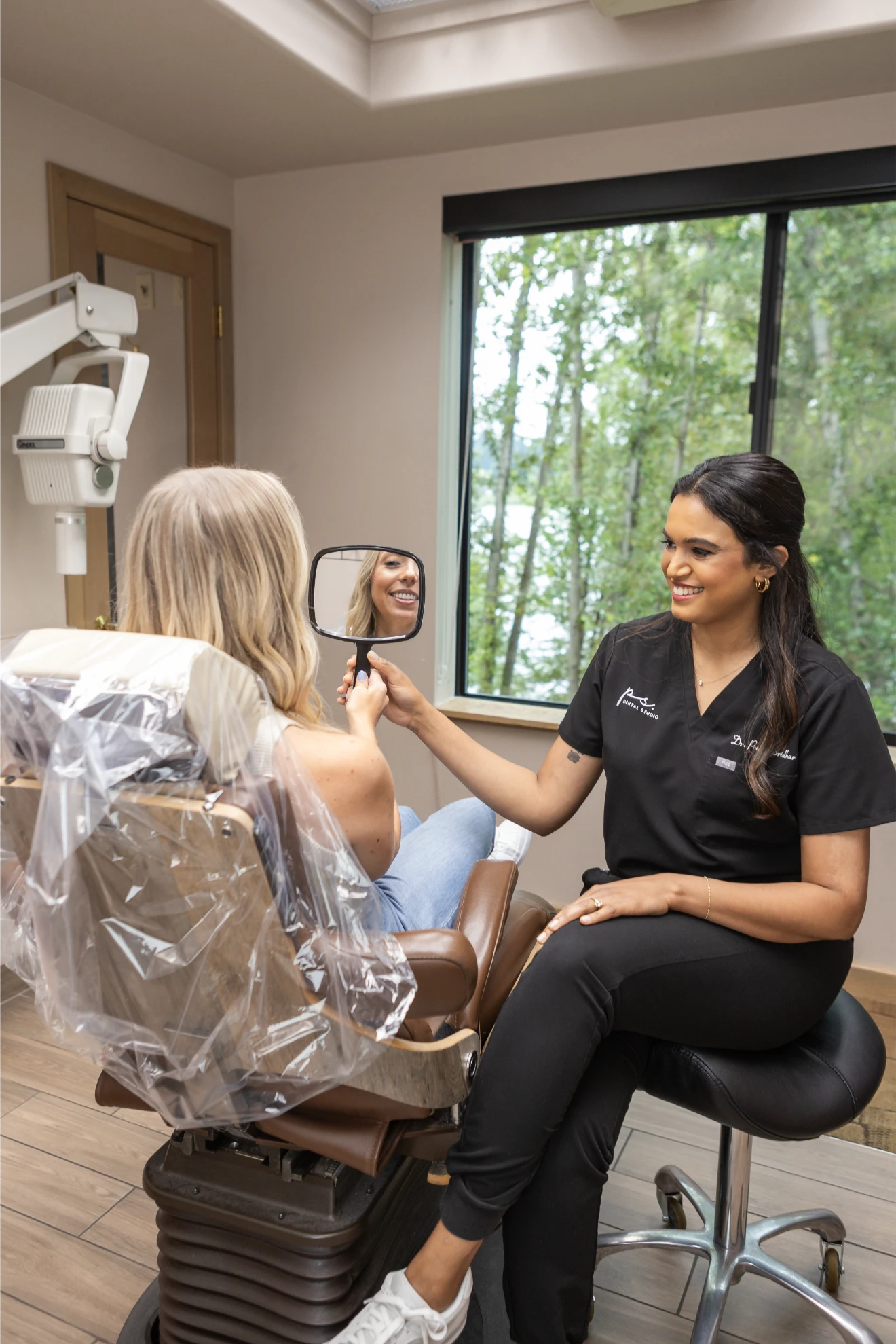
Patient reviewing finished porcelain veneer results with Dr. Sridhar at PS Dental Studio
03

Porcelain Fabrication and Placement

Your veneers are custom-made to match the planned shape, shade, and proportions.

Once they are ready, Dr. Sridhar evaluates their fit, appearance, and relationship with your bite before bonding them to the teeth.

In a true no-prep case, significant drilling and temporary veneers are generally unnecessary.

Preservation with Perspective

Benefits of No-Prep Veneers

For the right candidate, the primary benefit is preservation of natural tooth structure.

Potential advantages include:

  • Little to no enamel reduction
  • Conservative treatment planning
  • Less need for drilling in true no-prep cases
  • Anesthesia may not be necessary
  • Temporary veneers may not be needed
  • Porcelain can improve shape, spacing, length, and proportion
  • More natural enamel remains available for bonding

Because enamel does not grow back once removed, preserving it when clinically appropriate can be valuable.

That does not mean no-prep veneers should automatically be considered reversible. Removal or replacement depends on the individual case, the bonding process, and how the teeth change over time. PS Dental Studio therefore approaches porcelain veneers as a long-term treatment decision even when very little enamel preparation is required.

How Long Do No-Prep Veneers Last?

PS Dental Studio generally discusses porcelain veneer longevity in the range of approximately 10–15 years, although individual restorations may last longer with good oral hygiene, regular dental care, a stable bite, and protection from excessive grinding.

Longevity depends on factors such as the underlying tooth, the veneer design, bite forces, bonding, and long-term maintenance, not simply whether the veneer was placed using a no-prep technique.

Your Investment

How Much Do No-Prep Veneers Cost in Kenmore?

At PS Dental Studio, porcelain veneers range from $1,800 to $2,500 per tooth.

No-prep veneers fall within that porcelain veneer pricing framework. The exact cost depends on your individual treatment plan rather than whether the procedure is labeled “no-prep.”

Porcelain veneers
$1,800–$2,500
Per tooth · Personalized to your treatment plan
Discuss Your Smile

What Affects Your Total Cost

  • Number of teeth being treated
  • Complexity of the smile design
  • Porcelain and laboratory requirements
  • Whether the case can remain completely additive
  • Whether limited preparation is needed
  • Bite or alignment concerns
  • Any treatment required before veneers are placed

A consultation provides a personalized recommendation and cost based on your smile.

Your Care at PS Dental Studio

Why Choose PS Dental Studio for No-Prep Veneers?

No-prep veneer treatment depends heavily on case selection and treatment planning.

Dr. Priya Sridhar evaluates not only how the teeth will look after treatment, but also how the new shape and added porcelain will interact with the bite and surrounding teeth.

That is especially important with additive dentistry. Preserving enamel is valuable, but only when the added porcelain can still create a natural-looking, functional result.

Your Questions, Answered

Frequently Asked Questions About No-Prep Veneers

How much do no-prep veneers cost?

Porcelain veneers at PS Dental Studio range from $1,800 to $2,500 per tooth. Your total cost depends on the number of veneers and the complexity of your treatment plan.

Do no-prep veneers require shaving your teeth?

A true no-prep veneer is designed to require little to no enamel reduction. Some patients are better suited to minimal-prep veneers, where a small amount of shaping helps improve contour or fit.

Are no-prep veneers reversible?

They may preserve more natural tooth structure than traditional veneers, but they should still be considered a long-term treatment. Whether a veneer can later be removed without altering the tooth depends on the individual case.

Do no-prep veneers look bulky?

They should not when the case is selected and designed appropriately. Teeth that already project outward or do not have room for added porcelain may require minimal preparation or another treatment approach.

Can no-prep veneers fix small teeth?

Yes. Naturally small or narrow teeth may be good candidates because there can be room to add width or length without removing much enamel. Bite, tooth position, gums, and overall smile design still need to be evaluated.

Do you need temporary veneers with no-prep veneers?

True no-prep cases often do not require temporary veneers because the underlying teeth have not been substantially reshaped.

Your Next Step · Kenmore, WA

Find Out if No-Prep Veneers Are Right for You

If preserving as much natural enamel as possible is important to you, the first step is determining whether your smile has enough room for an additive veneer approach.

Dr. Priya Sridhar can evaluate your tooth position, enamel, bite, proportions, and cosmetic goals to determine whether no-prep, minimal-prep, or traditional porcelain veneers are the best fit.

PS Dental Studio is located in Kenmore, WA and serves patients from Bothell, Northshore, Seattle, and surrounding communities.

(425) 485-0588

Call to schedule your veneer consultation.